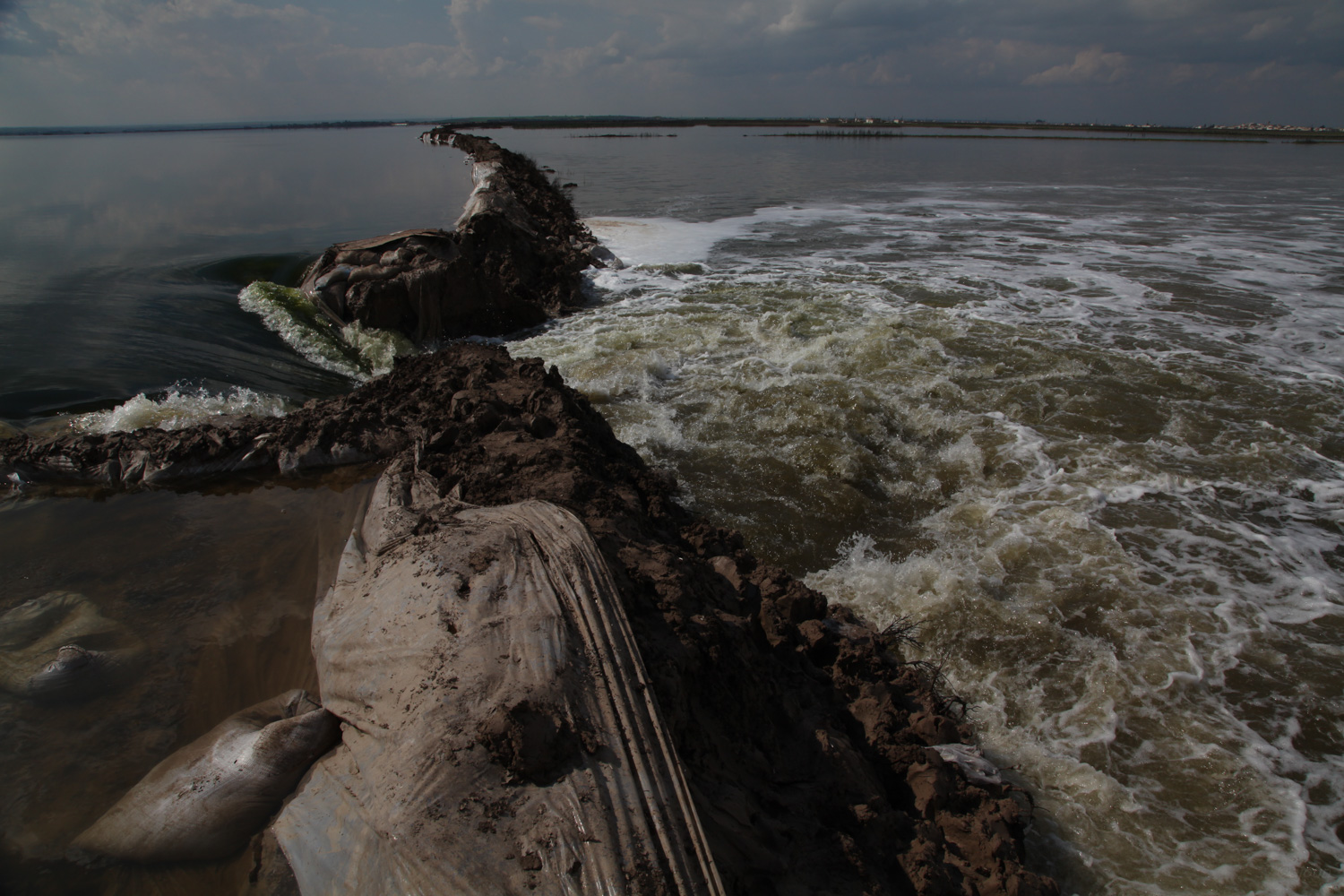
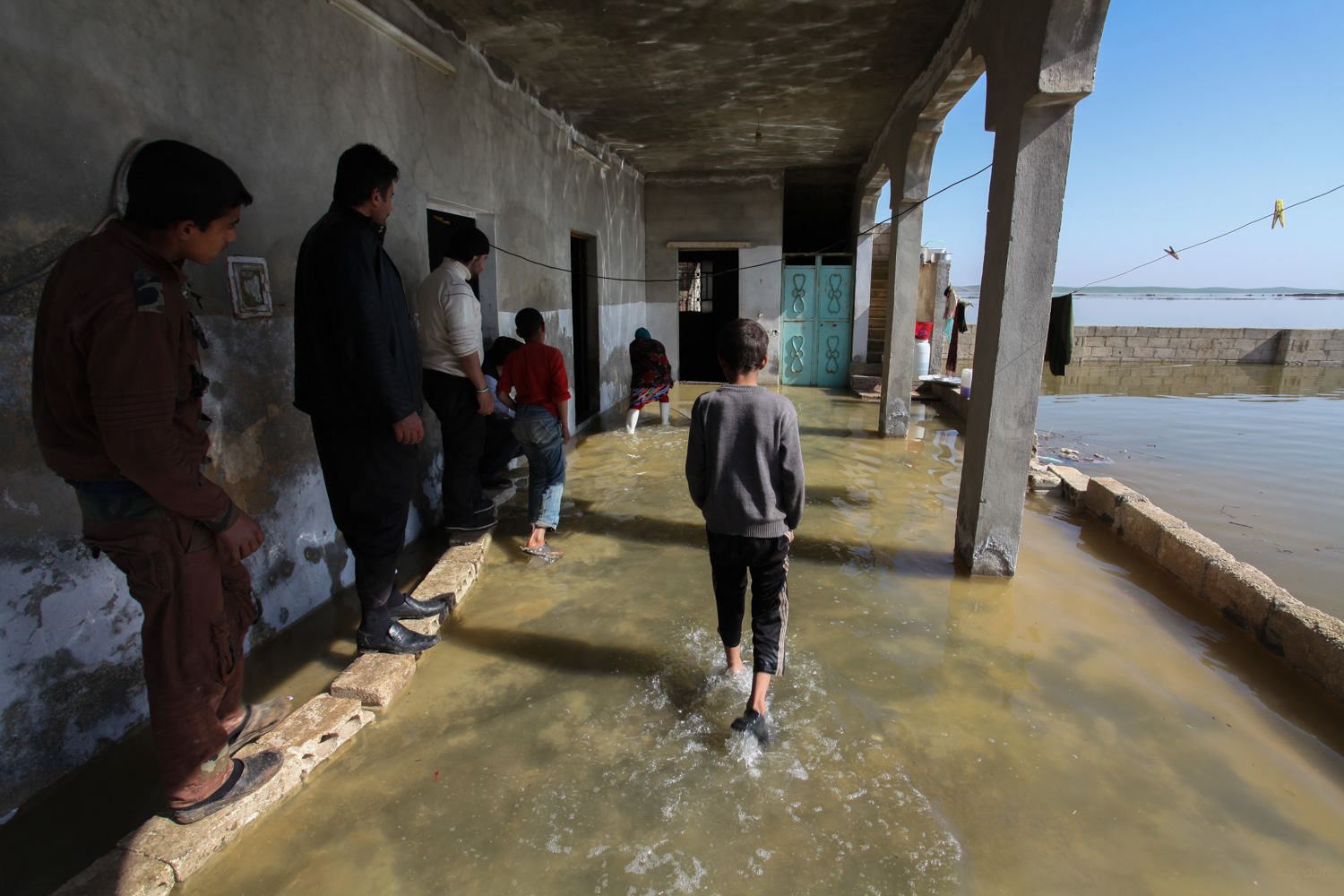
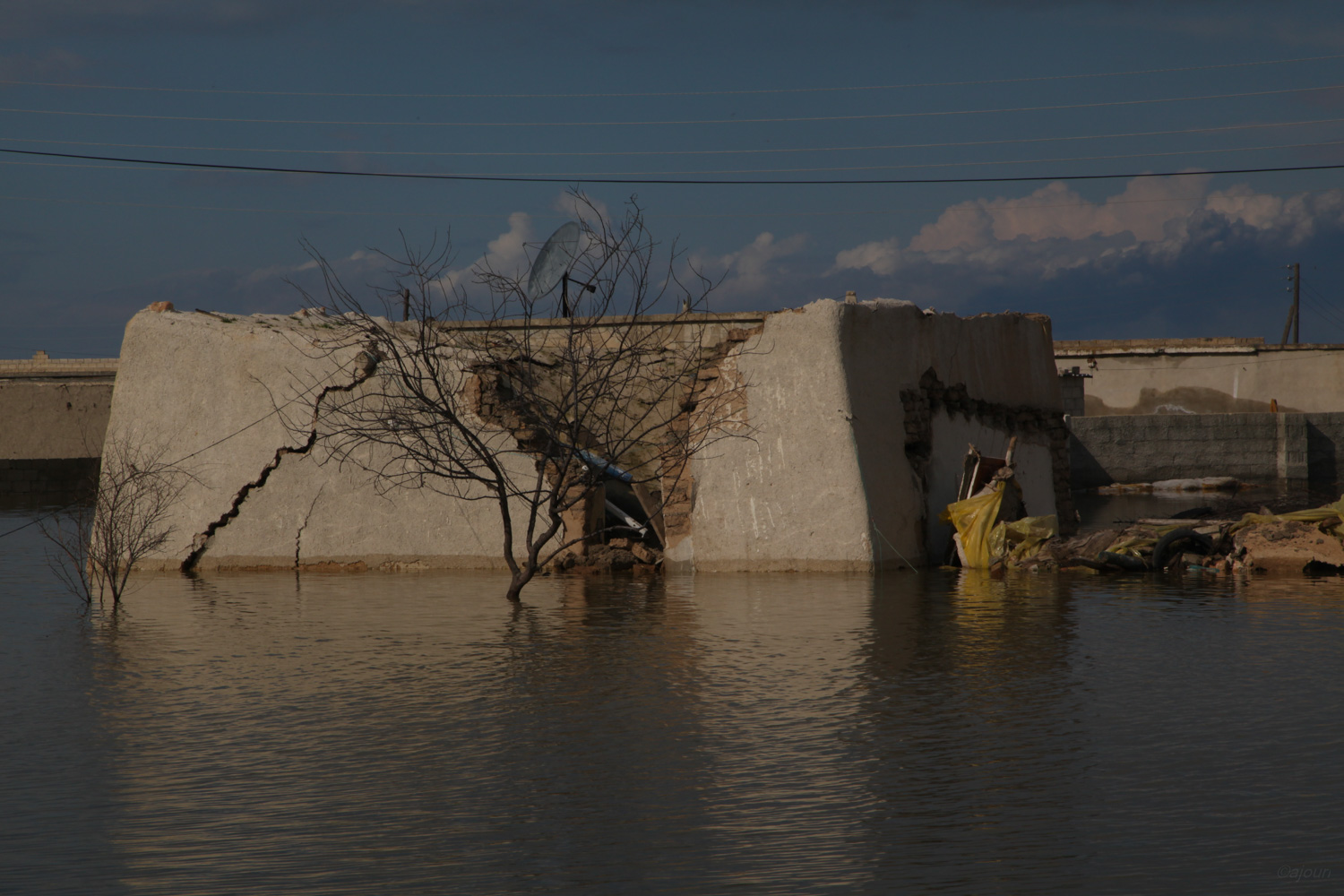
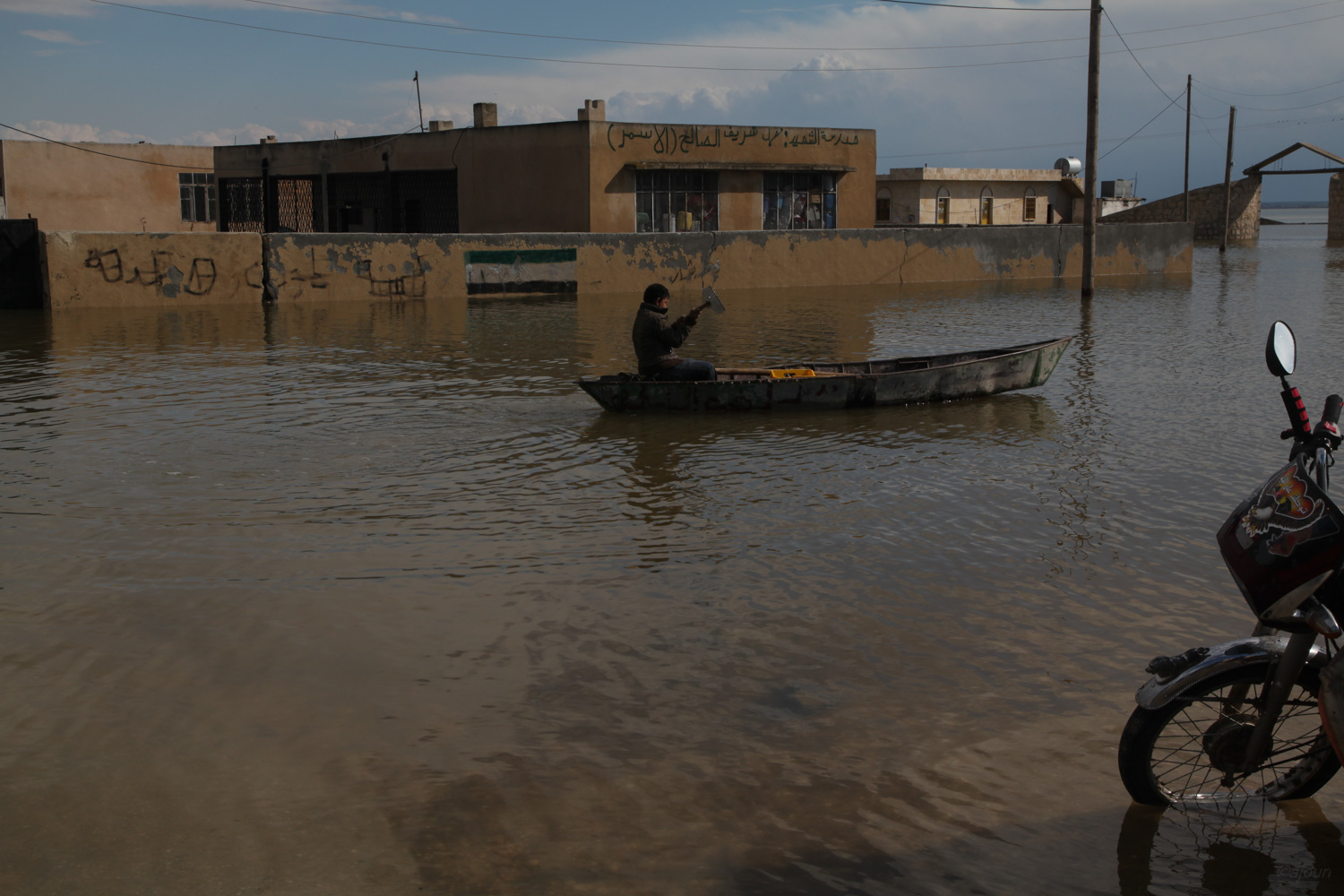
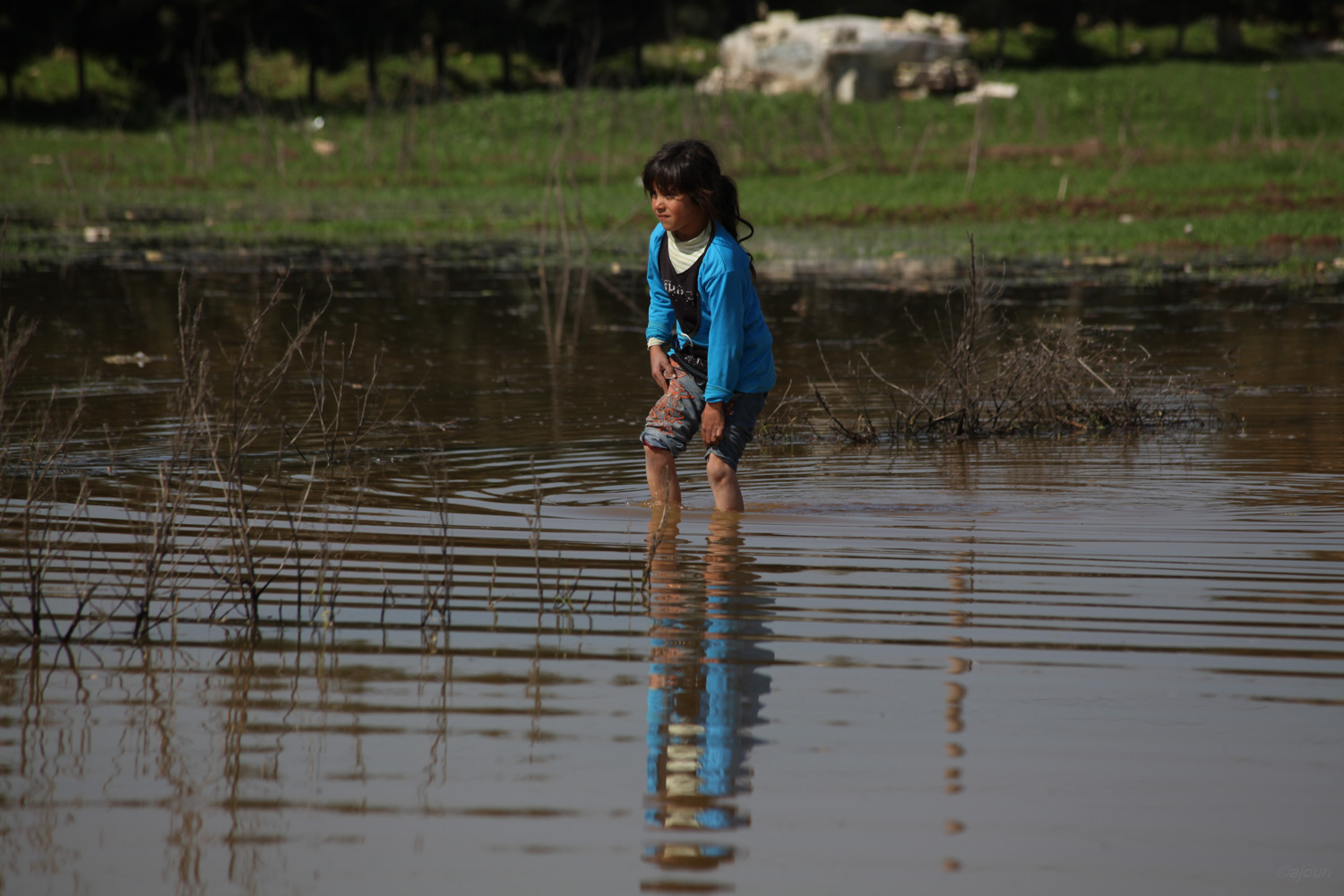
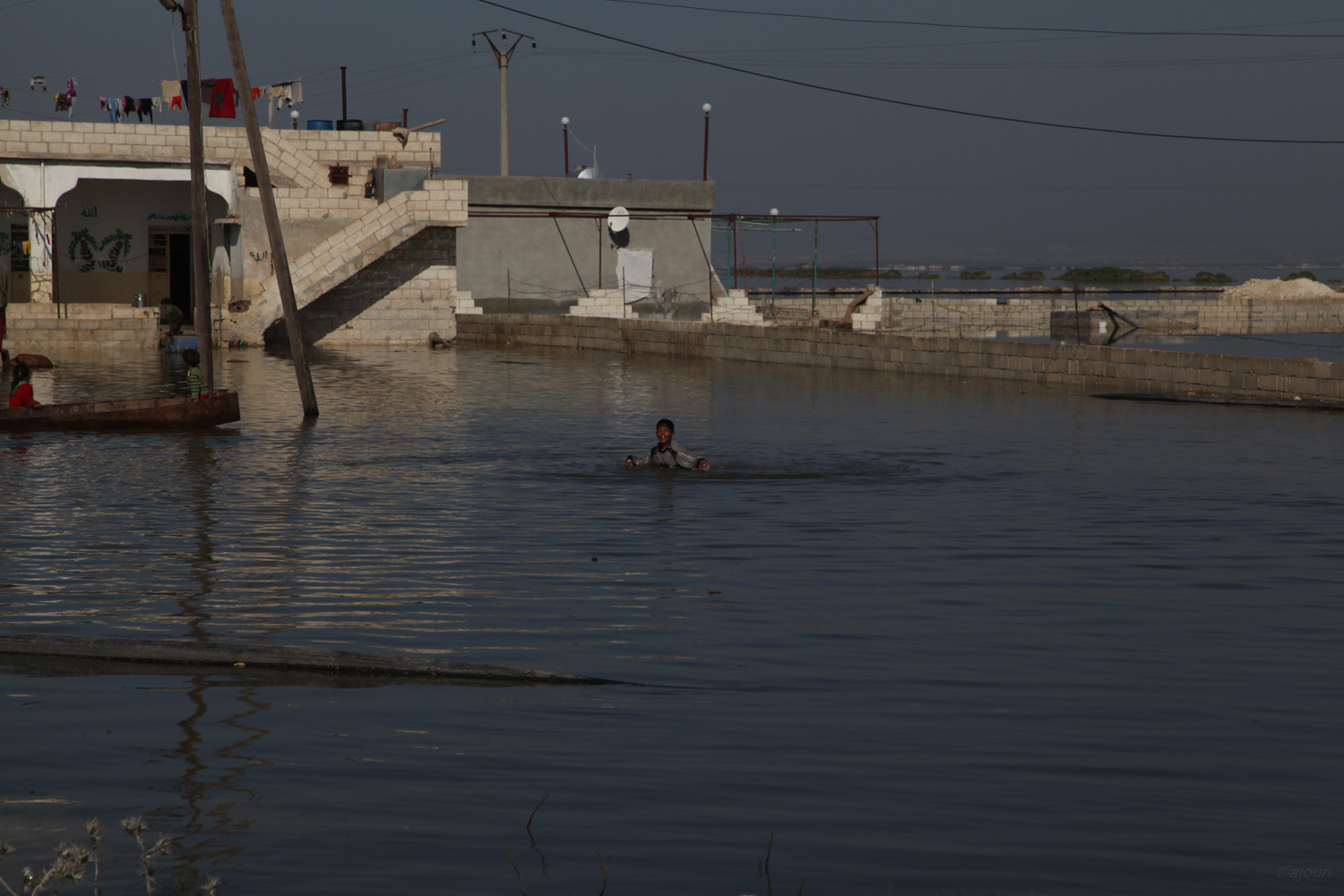
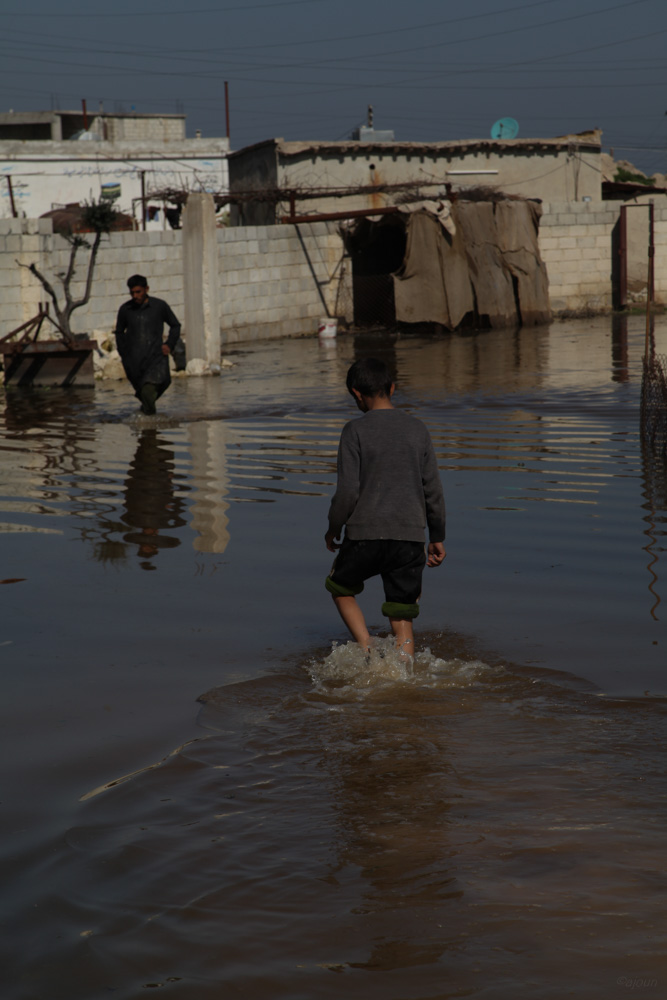
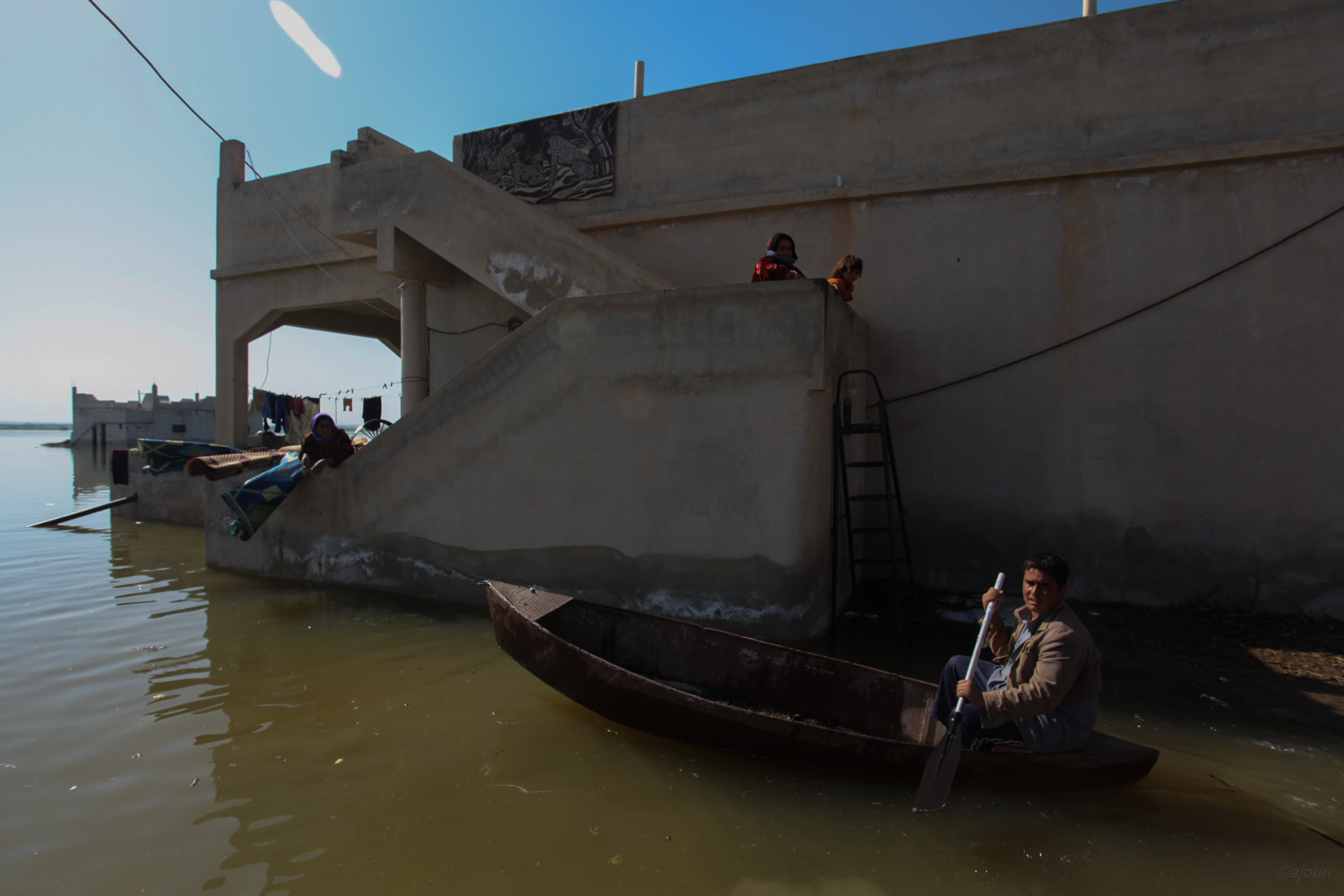
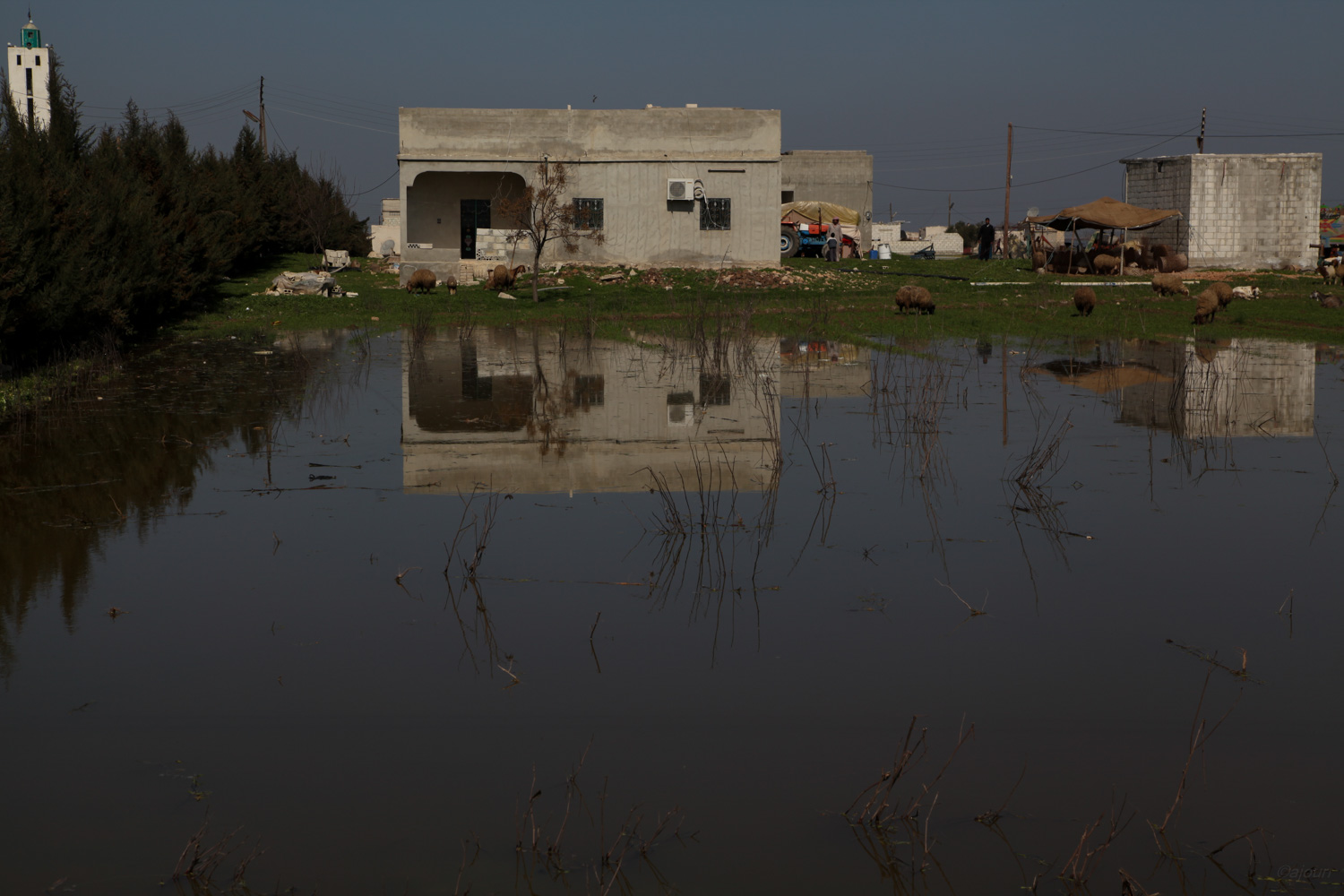
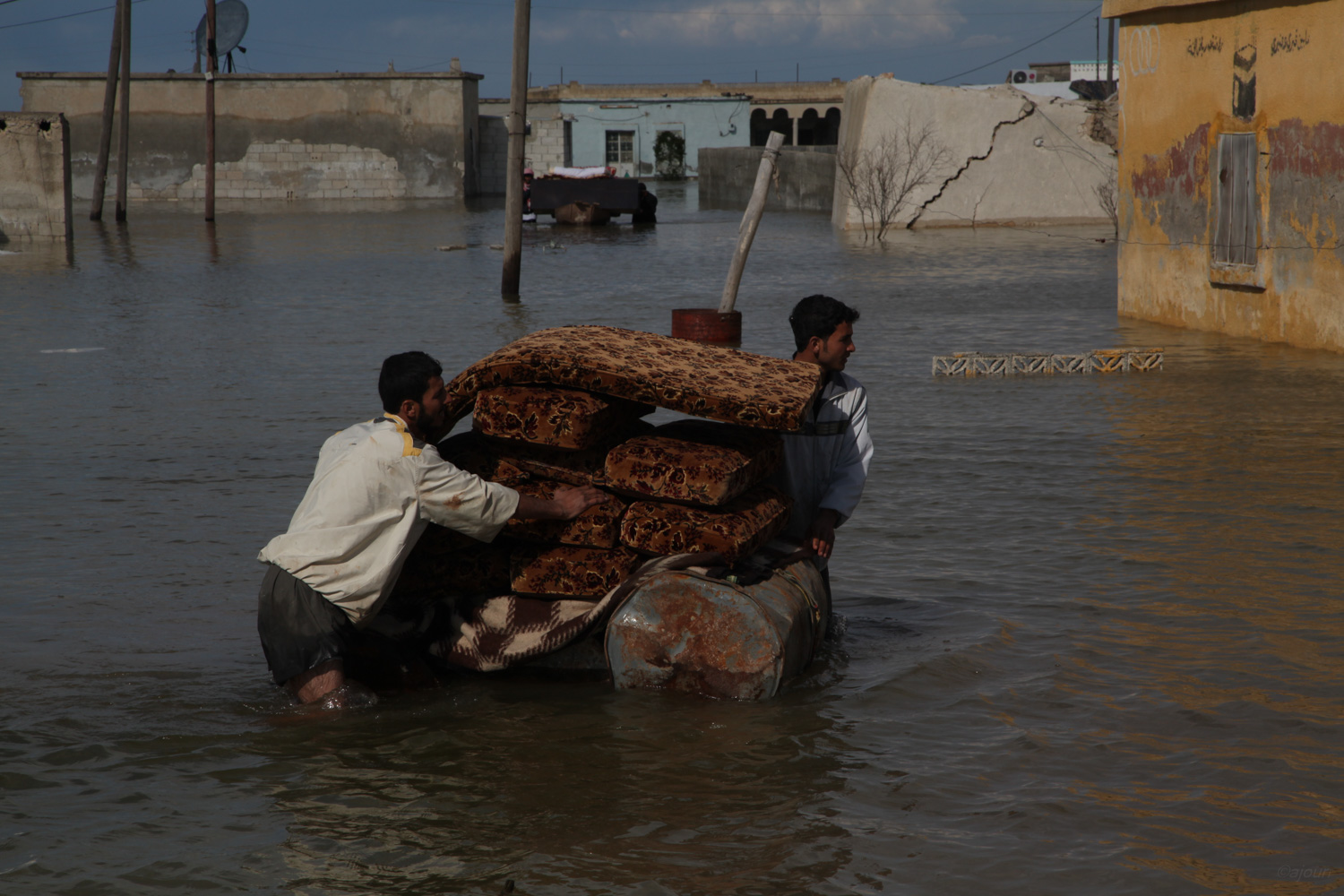
During the Syrian Civil War, in a calculated effort to suppress regions of rebellion, the regime blocked the flow of water from the Queiq River, flooding areas in the province of Idlib, including the village of Abu Al-Duhur. This man-made disaster was intended to flood the region and disrupt the growing resistance in the area, submerging homes and farmlands under polluted water that came from the industrial zone of Aleppo.
The resulting flood was catastrophic: entire villages were destroyed as houses collapsed under the weight of the water. As the flooding worsened, families fled their homes, seeking refuge in other nearby villages. But those villages too were eventually overwhelmed by the rising waters, leaving the displaced population with nowhere to go.
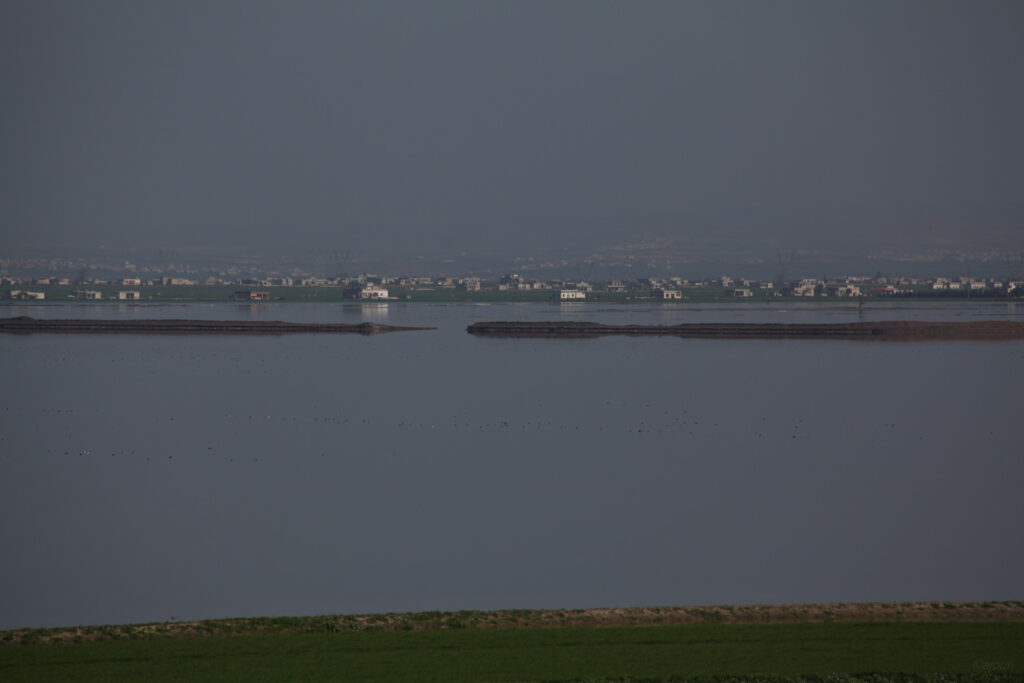
The water, tainted with industrial pollutants, not only caused physical destruction but also led to severe health and environmental problems. The people of this region, already marginalized and oppressed by the regime, faced an additional layer of suffering as they were forced to deal with both displacement and contamination.
I visited the area in 2013 and captured photographs that helped raise awareness of the situation. These images played a key role in organizing support from humanitarian organizations, which contributed to the construction of earth barriers and provided aid to the local population.